
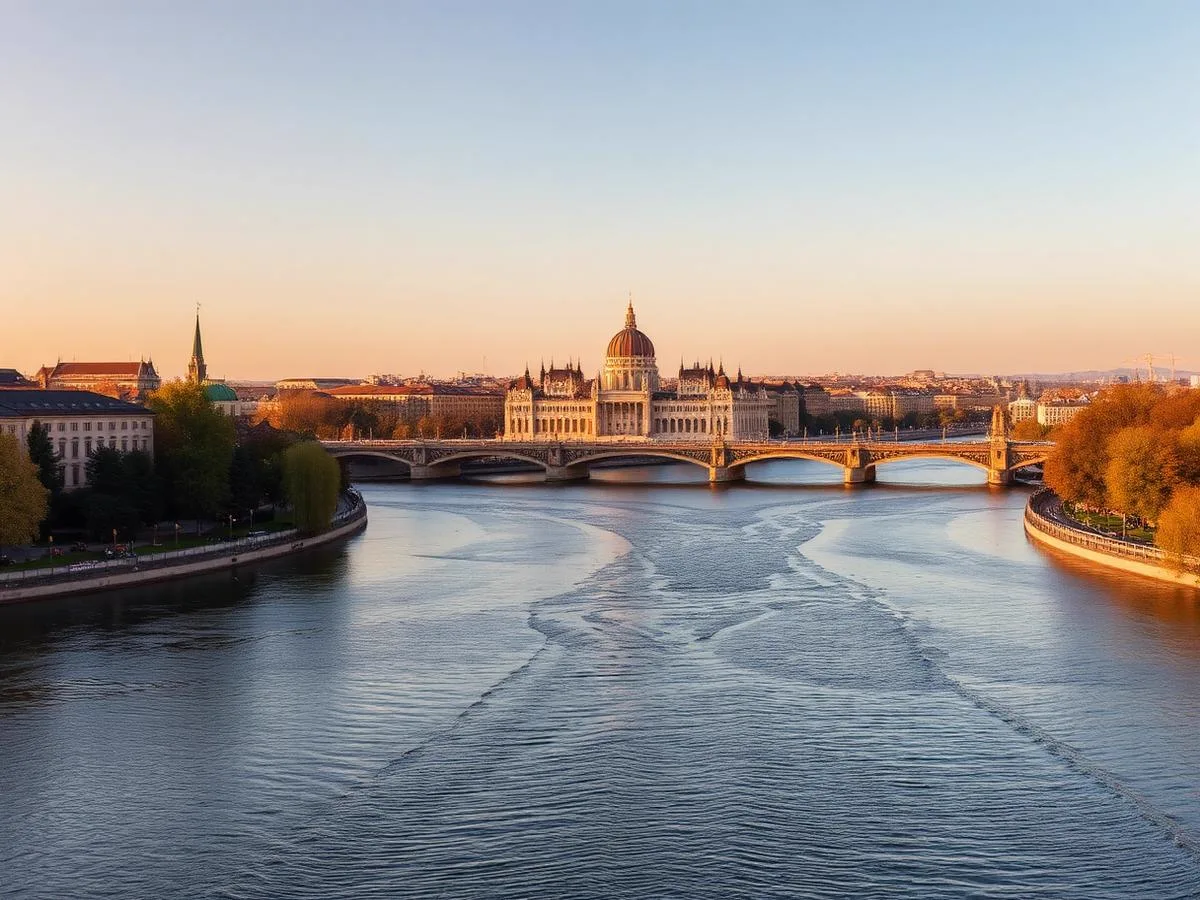
There is no single best time to visit Budapest — there is a best time for you. This month-by-month guide covers weather, crowds, prices and what is actually happening in the city, so you can pick the window that fits your trip.
The short answer
If you want the cleanest balance of good weather, manageable crowds and fair hotel prices, come in late April to early June or mid-September to late October. Those two shoulder windows are when Budapest is at its most comfortable: warm enough to sit outside, cool enough to walk all day, and quiet enough that you can get a table without booking three weeks ahead. July and August are hottest and busiest. December is magical but cold and expensive. January and February are the cheapest months of the year, and the thermal baths have never felt better than at 3°C.
Spring (March, April, May)
March is still unpredictable — grey mornings, sudden bright afternoons, temperatures roughly 5-14°C. Prices are low and the city feels like it belongs to the people who live here. April is when Budapest turns. Margaret Island greens up, riverside terraces reopen, and daytime temperatures climb into the high teens. Expect a few rainy days; pack a light jacket. May is arguably the single best month of the year: 20-25°C, long evenings, everything open, and the summer crowds still a few weeks away. Book accommodation earlier than you think — May weekends fill fast.
Summer (June, July, August)
June is warm and busy but not yet punishing — mid-to-high 20s, festival season starting, and the Danube evenings are excellent. July and August are peak: regularly 30-35°C, with heat that sits in the stone of the city until well after dark. This is also when the big events land — Sziget in mid-August, the St Stephen's Day fireworks on 20 August. If you come now, plan around the heat: sightseeing early, an indoor museum or a long lunch in the middle of the day, and the river or the baths in the evening. Hotel prices are at their highest, and a room with real air conditioning is worth paying for.
Autumn (September, October, November)
September is the summer you actually wanted — mid-20s, warm water still at Balaton, wine harvest starting in Tokaj and Eger, and noticeably fewer people. October is the photographer's month. The Danube embankments and Margaret Island turn gold, mornings are misty, and light on the Parliament is at its best all year. Temperatures sit around 10-18°C. November is the quiet month: grey, damp, cheap, and honestly lovely if you like museums, ruin bars, long café mornings and thermal baths without queues. The Christmas markets open in the second half of the month.
Winter (December, January, February)
December belongs to the Christmas markets — Vörösmarty tér and the Basilica are the two big ones, running from late November to the new year. It is cold (0-6°C), the city is at its prettiest, and hotel prices rise again, especially over New Year. January and February are the cheapest weeks of the year. It can drop below freezing, there may be snow, and daylight is short. But this is when the thermal baths make the most sense — sitting in 38°C water outdoors with steam rising around you is a genuinely Budapest experience, and it is far better in winter than in July.
Best time by traveller type
• First-time sightseeing: May or late September — comfortable walking weather, everything open. • Budget: mid-January to early March, or November. Flights and hotels are at their lowest. • Thermal baths: November to February. Cold air, hot water, no queues. • Festivals and nightlife: June to August, peaking with Sziget in mid-August. • Photography: October for autumn colour and morning mist; December for market lights. • Families: late May, early June or September — warm but not exhausting, and school holidays partly avoided. • Wine trips to Tokaj or Eger: September and October, during harvest.
What this means for booking
Rough rule: book 2-3 months ahead for May, June, September and December, and 3-4 months ahead if your trip overlaps Sziget or the 20 August weekend. For January, February and November you can often book a few weeks out and still do well. Once you have picked your month, our neighbourhood guide to where to stay in Budapest is the natural next step, and the trip cost calculator will give you a realistic daily budget for that specific season.
Practical Info
- Best overall
- Late April-early June and mid-September-October
- Cheapest
- Mid-January to early March, and November
- Hottest
- July-August, often 30-35°C
- Coldest
- January, around -1 to 4°C
- Busiest
- Mid-August (Sziget, St Stephen's Day) and December markets
Temperatures are typical averages — Budapest has a continental climate, so individual weeks vary.