
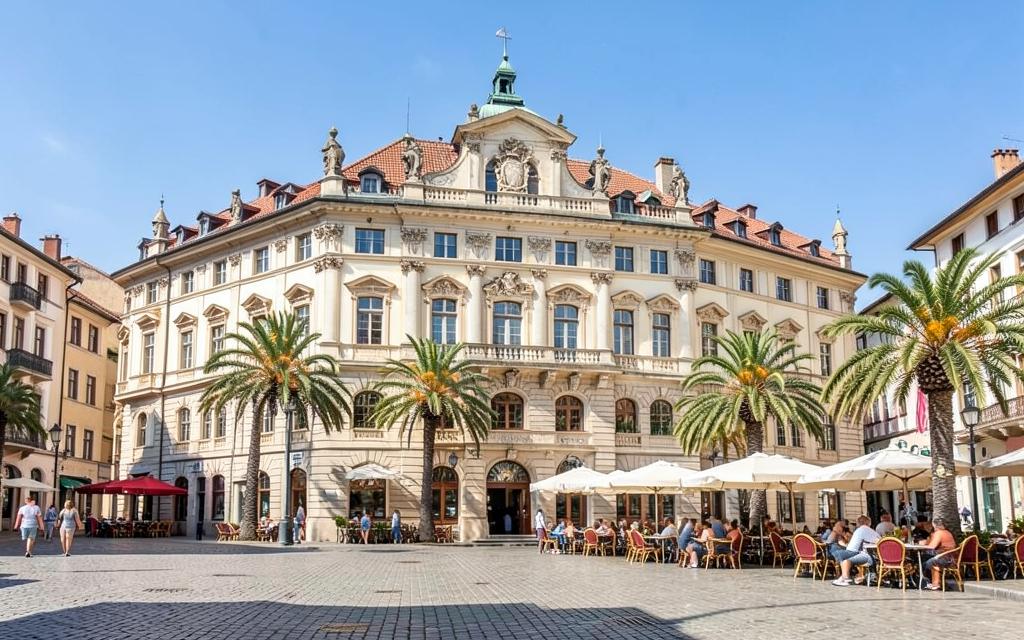
Historic hotel
Hotel Palatinus City Center
Pécs, Király utca · from ~€95 / night
The splurge: an Art Nouveau landmark on the main pedestrian street, worth it for the lobby alone.
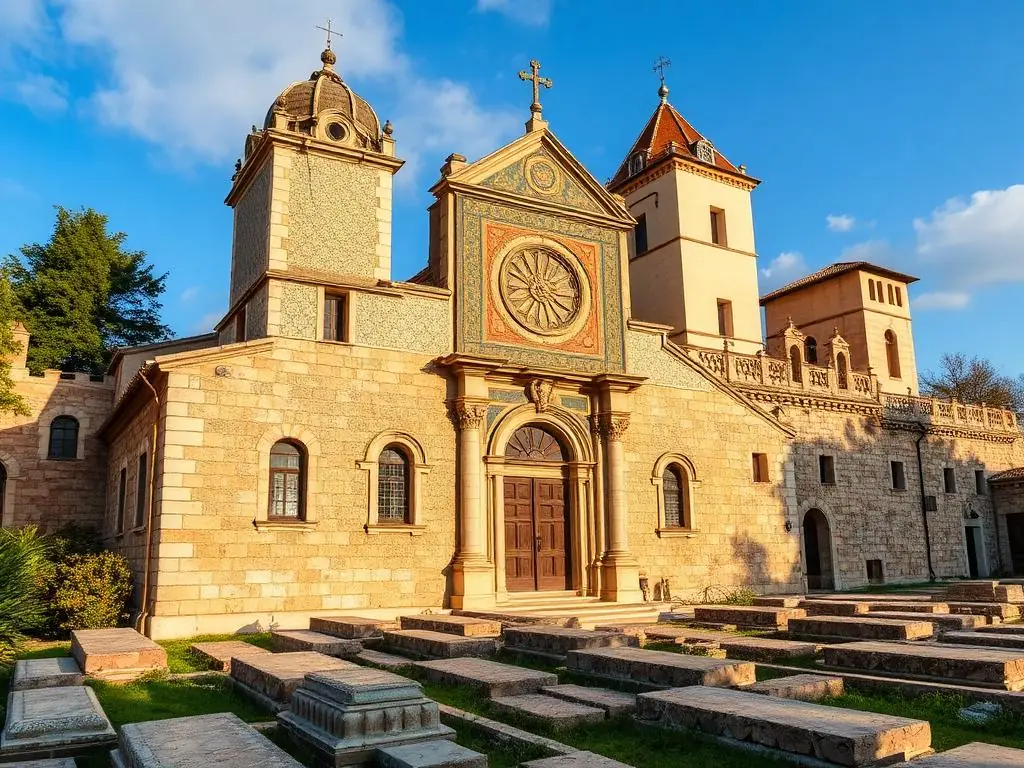
Where Rome Meets Ottoman Meets Bohemian
Pécs is Hungary's most layered city — and one of its most beautiful. It was a Roman settlement for 400 years, then a medieval bishopric, then an Ottoman administrative centre for 150 years, then a university city that became a centre of Hungarian art and ceramics. Today it is a warm, sun-drenched southern city with more hours of sunshine than anywhere else in Hungary, a magnificent mosque repurposed as a church, early Christian burial chambers from the 4th century that are a UNESCO World Heritage Site, and a café culture that feels almost Mediterranean.
Converted to a Catholic church after the Ottomans.
UNESCO burial chambers from 300 AD.
Famous porcelain factory turned cultural district.
Four-towered Romanesque landmark.
The heart of the city.
Outstanding museum complex.
Walking trails above the city.
Hungary's best reds, 30 min south.
April to October. Pécs gets more sunshine than anywhere in Hungary — a genuine pleasure in summer without Balaton crowds.
A short, honest shortlist instead of a thousand search results: one splurge, a few independent mid-range favourites and a good-value budget option.
Pécs, Király utca · from ~€95 / night
The splurge: an Art Nouveau landmark on the main pedestrian street, worth it for the lobby alone.
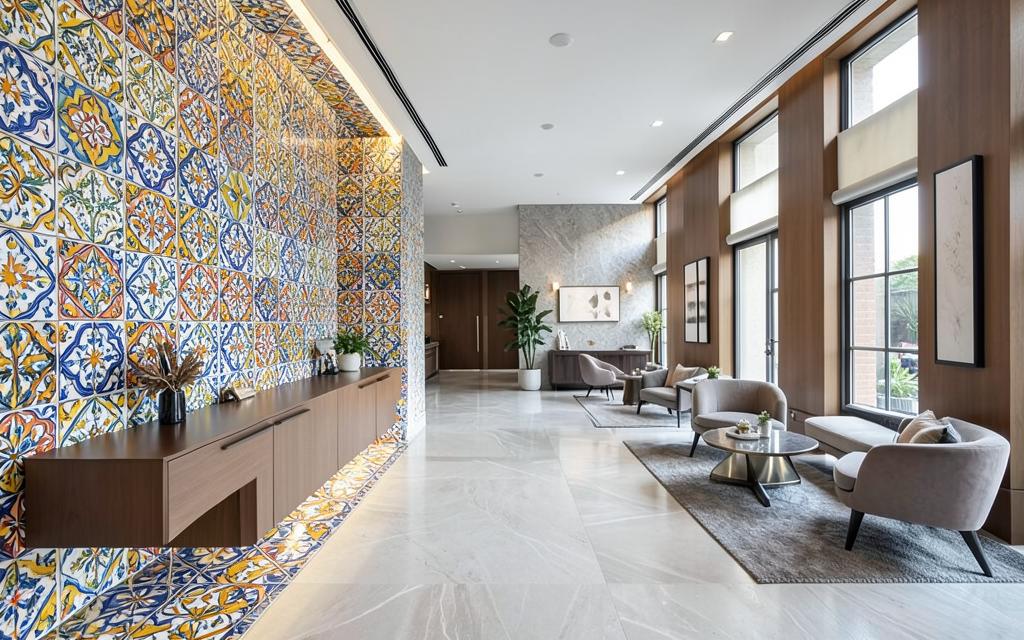
Pécs centre · from ~€85 / night
Modern, quiet rooms and a rooftop terrace, a couple of minutes from Széchenyi tér.
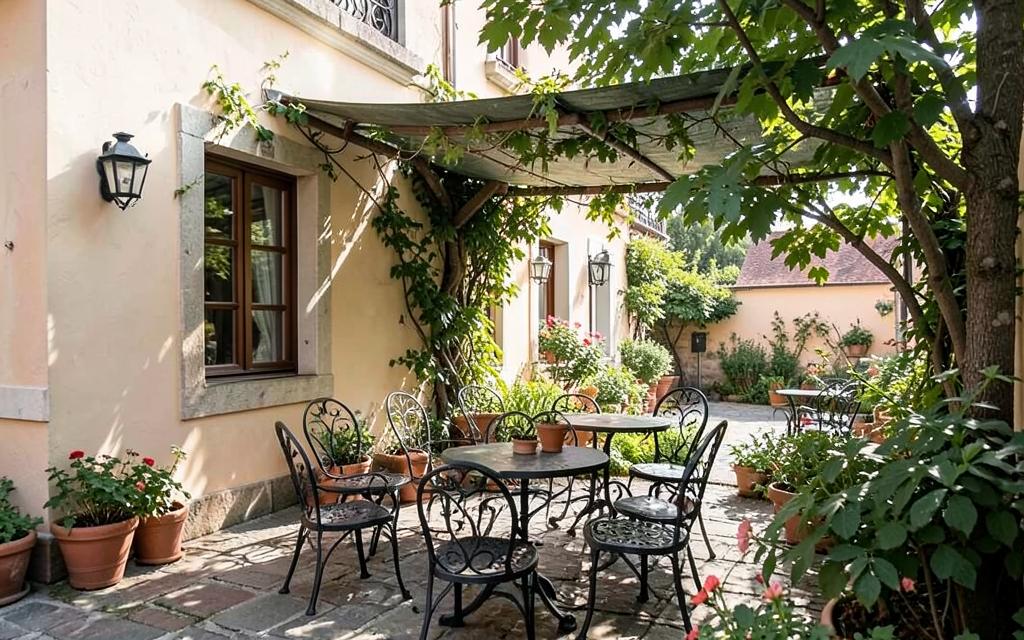
Pécs, Ágoston tér · from ~€70 / night
Independent and friendly, uphill from the centre so it stays quiet at night.
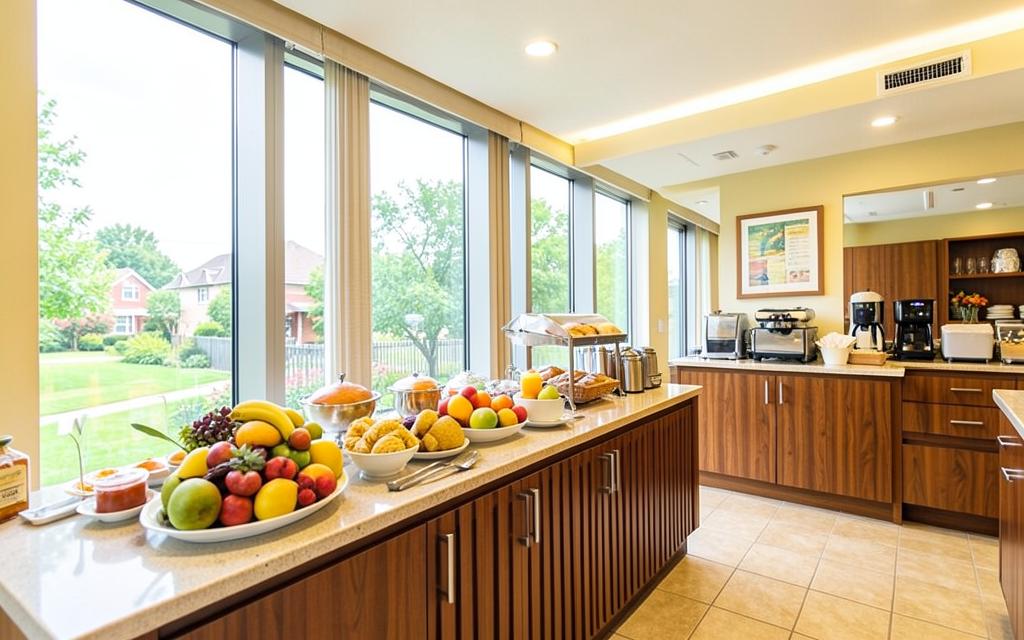
Pécs, near the cathedral · from ~€65 / night
Simple family-run rooms in a leafy street, walking distance to the early Christian tombs.
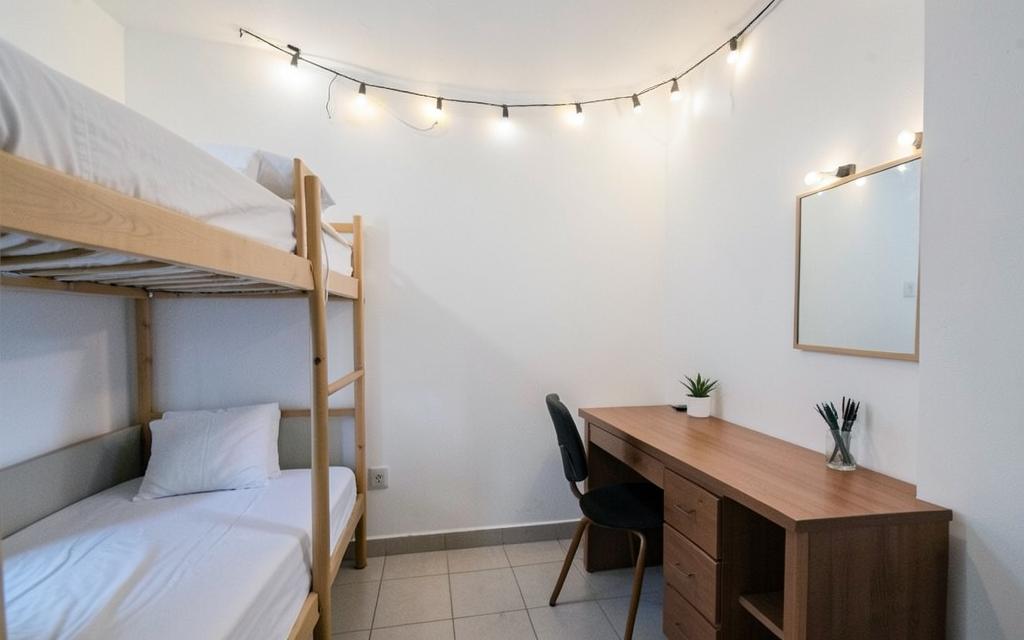
Pécs, Király utca · from ~€25 / night
Budget pick: dorms and private rooms in a courtyard building right in the middle of everything.
Some links are affiliate links — we may earn a small commission at no extra cost to you. Prices are shoulder-season estimates for a double room and change with dates. Card images are illustrative regional photography, not photos of the individual property.
Autumn colours and thermal-bath weather — quieter and cheaper than summer. Compare hotels, guesthouses and apartments — best price guaranteed.
Search Pécs hotels →Powered by Booking.com — prices are estimates and change seasonally.
Yes — layered Roman, Ottoman and Hungarian history, a UNESCO-listed early Christian necropolis, the Zsolnay quarter and Hungary's sunniest climate.
About 2h 30m by car via the M6, or roughly 3 hours direct by train from Keleti station.
2 days for the city itself; add a third for the Villány wine region 30 minutes south.
The restored Zsolnay porcelain factory, now a cultural district with museums, galleries, cafés and the famous ceramic works.
Yes — the Villány region just south produces some of Hungary's best reds (Cabernet Franc, Kékfrankos) and is easy to combine with the city.